Exactly how to Repair a Garage Door That Won't Shut Effectively
A garage door that declines to close completely is greater than an annoyance. It leaves the home revealed, compromises protection, and on the Gold Coastline it can come to be a severe storm-season trouble very swiftly. A door that hangs open by also a few centimetres can allow wind-driven rain, welcome parasites, and taxed the rest of the garage structure when serious weather condition gets here. Queensland support treats garage doors as a recognized weak point in cyclones for good reason. If the door is not shutting properly, the problem needs focus before the next heavy climate system checks it.
Most home owners initially discover the trouble in a tiny way. The remote jobs, the motor hums, the door begins down, then it turns around. Sometimes the door shuts partway and leaves a noticeable gap near the floor. Other times one side rests lower than the other, or the seal meets the ground in one edge but not the other. Those symptoms point to different faults, and the right repair depends upon reading the practices of the door instead of requiring it.
Start with the most basic causes
Before anyone reaches for tools, it aids to view the door via a full cycle. A lot of the moment the concern is not a fallen short huge part, yet a tiny obstruction, a sensing unit fault, or a setting that has actually wandered. That is particularly real on automated systems where the garage door electric motor is doing precisely what it was told to do, just not what the house owner expected.
The most convenient points to check are the door path and the floor line. A mop manage, a stone, a deformed weather condition seal, or perhaps a bit of packed particles can quit the door from seating correctly. On older homes, the concrete slab can settle a little, and the door may now be attempting to shut versus a floor that is no longer degree. In damp coastal problems, seals also mature much faster than people anticipate. A seal that looks undamaged from a distance can be rigid, flattened, or uneven enough to keep the last inch from closing cleanly.
If the door quits and reverses prior to getting to the ground, the opener might be sensing resistance. That does not always mean the motor is stopping working. It typically suggests the system thinks the door has struck something. If the door closes, touches the ground, after that recovers up, the force setup might be as well sensitive or the travel restriction might be off. Those prevail repair points, and they are worth inspecting prior to assuming a larger fault.
What normally goes wrong
The most typical reasons are mechanical, not mystical. Tracks can move. Hinges can loosen. Rollers can bind. Springs can lose balance. Wires can stretch or slide. Any among those problems can maintain the bottom area from satisfying the flooring squarely.
With sectional doors, one side can travel somewhat in advance of the other if a roller is worn or a hinge is bent. That produces a twist in the last approach, and the opener may quit when it discovers extra tons. Roller doors can behave differently, however the result is comparable. If the door jams, scuffs, or leaves a space, the barrel, guides, or drape positioning might need focus. Tilt doors have their own collection of issues, typically around the arms, pivots, and balance.
The opener itself can additionally be the offender. A garage door motor that has actually shed calibration may think the door is currently closed when it is not. In many cases the electric motor is great, but the drive chain or belt has slack that permits a little additional motion without enough pressure to finish the cycle. That can be sufficient to trigger a turnaround or leave the door except its appropriate position.
Electrical mistakes are less typical than used hardware, however they do take place. A remote with a weak battery, a misaligned wall control, or a sensor problem can all result in complex practices. If the opener reacts unexpectedly, do not ignore the straightforward points. I have seen more than one door "failing" fixed by changing a remote battery and cleansing a set of security sensing units that had dust and cobwebs before them.
A sensible method to identify the problem
When a garage door won't close effectively, the very best strategy is to divide the issue into course, balance, and control. That makes repair more efficient and decreases the possibility of going after the incorrect issue.
Use this short check initially:
- Look for anything physically blocking the door path, including debris, a displaced seal, or an item at the flooring line.
- Watch whether the door closes unevenly, which directs towards rollers, hinges, cable television tension, or track alignment.
- Check whether the door reverses at the same factor whenever, which typically suggests a restriction setting or sensor issue.
- Listen for grinding, scuffing, or a strained electric motor, because those audios frequently reveal binding hardware.
- Inspect the seals and framework for voids, damages, or visible wear that could prevent a full close.
That process appears standard, yet it eliminates an unexpected variety of callouts. It also helps you make a decision whether the issue is safe to examine on your own or whether it belongs to a technician.
Safety issues greater than speed
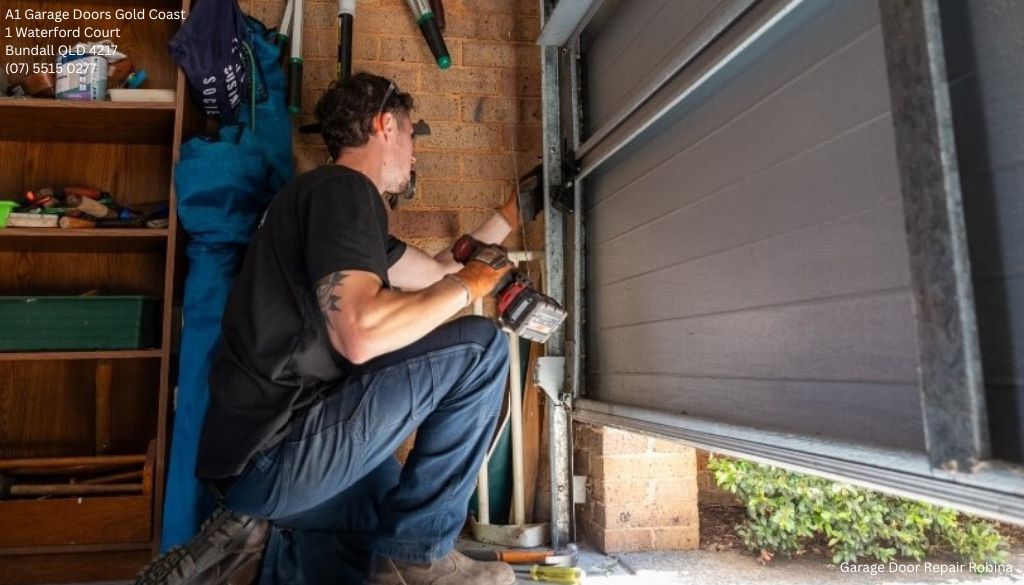
There is a point where home owners ought to stop and call for emergency repair work. Garage doors are hefty, and the springtime system stores enough stress to trigger severe injury if handled inaccurately. A door that is off balance, hanging jagged, or sticking midway down can go down suddenly if a wire slips or a spring paves the way. That is not the moment for improvisation.
If the door is visibly warped, one side is off the track, or a cord has actually come loose, do not keep cycling the opener. Repeated efforts can damage the motor, bend hardware further, or draw the door harder versus the trouble. In storm period, a broken door that keeps being forced closed can end up being unstable at the specific moment when the home needs it to be reliable.
There is likewise a good factor Queensland readiness material stresses safe openings before serious weather. A garage door that stops working under wind stress can bring about broader damage to wall surfaces, ceiling cellular linings, and roof covering cladding. Once the garage envelope is endangered, the problem seldom stays neighborhood. It spreads out. That is why fixing choices need to make up weather risk, not just day-to-day convenience.
When the concern is the opener
If the door relocates easily by hand but fails when powered, the opener is entitled to close attention. A garage door motor may be under tension from a mis-set traveling limit, a delicate force setup, or worn drive parts. The indications are generally regular. The opener might start usually, after that stop early. It might reverse after touching the floor gently. It may additionally make a regular opening audio yet battle at the end of the closing cycle.
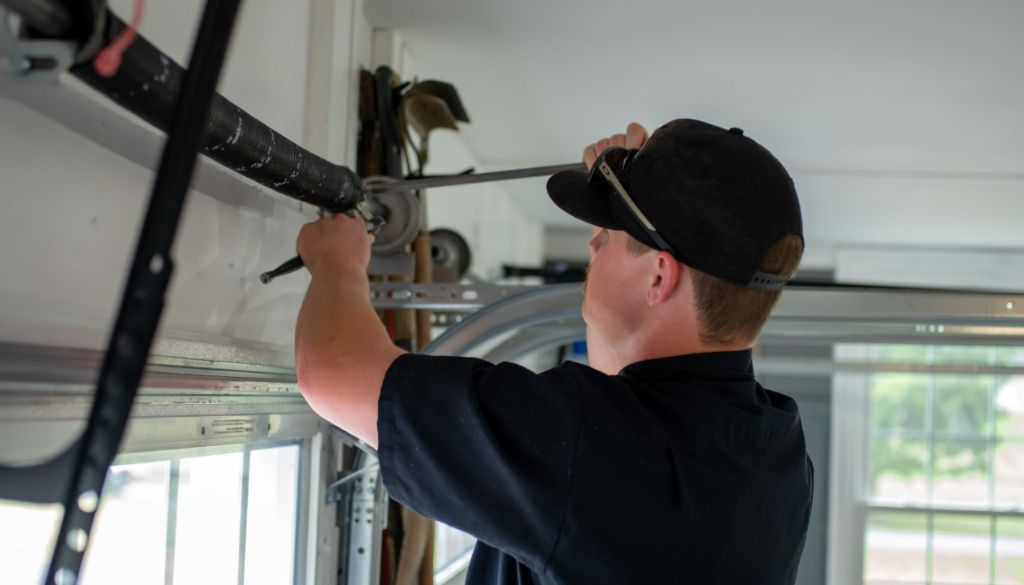
A skilled specialist will normally take a look at the traveling settings, drive stress, installing stability, and the condition of the opener's interior parts. For a homeowner, the helpful observation is whether the door behaves differently when run by hand. If it shuts efficiently by hand yet not with the electric motor, the trouble is probably not the door panels themselves. If it binds by hand, the trouble is mechanical.
That distinction issues due to the fact that way too many people replace remotes or criticize the opener when the actual cause is a bent track or failing roller. On the other hand, sometimes the opener has truly reached the factor where adjustment is no garage door installation more enough. If the motor is struggling on a door that or else looks healthy and balanced, the age and solution history of the opener become pertinent. An older device that has seen years of seaside humidity and duplicated storm-season usage may not be worth nursing through another season without service.
Seals, frameworks, and the home envelope
Garage door troubles are not constantly dramatic. In some cases the door shuts, yet the seal is bad. That still counts as a repair service concern, especially in a region where weather adjustments promptly. A used base seal, fractured side seal, or frame that has actually drifted out of square can allow water and wind even when the door technically reaches the closed position.
This is where preventive upkeep for garage doors pays off. Inspecting seals, bolts, and structure positioning prior to tornado season can prevent the sort of failing that transforms a regular solution call right into a bigger job. It is also among the much more economical behaviors a property owner can build. Replacing a seal is much simpler than taking care of dampness damage after repetitive rainfall intrusion.
The very same puts on a door that shuts but does not lock or seat firmly. Safety and security and storm strength overlap below. Queensland safety guidance referrals secure locking systems and anti-tamper features for sure applications, and that is not just an industrial issue. A garage that closes freely is much easier to require, less complicated to leakage, and easier to harm under pressure.
Repair options that make sense in genuine life
Not every repair service should be treated as a long-term spot. Some mistakes deserve taking care of quickly since they impact security and storm strength. Others are much better taken care of as component of a scheduled substitute, especially when the door is older or does not abide by present wind-pressure expectations.
If the issue is a single used seal, a misaligned sensing unit, or a small opener modification, an uncomplicated service visit may be all that is required. If the door has recurring track concerns, repeated equilibrium problems, or visible structural weakness, the conversation shifts. In cyclone-prone components of Queensland, replacing a non-compliant door can improve resilience in a meaningful method. The objective is not simply to get the door relocating once again, however to see to it it can withstand the conditions it is most likely to face.
That is particularly essential with roller doors and sectional doors that act as a large opening on the front of the home. A door that looks penalty in tranquil climate can still be a powerlessness in high wind. The distinction in between a door that shuts and a door that is properly ranked and secured issues when severe climate arrives.
What to do before the next storm season
Storm prep work should not start when a cyclone watch is provided. Already, there is hardly ever adequate time to figure out a used seal, a loud track, or a door that currently sticks at the bottom. The better habit is to inspect the door well before the season tightens up up.
A practical routine is to test the close cycle, pay attention for adjustments in sound, check the flooring seal, and search for motion in the tracks and equipment. If the door has actually come to be slower, shakier, or much less foreseeable over the last couple of months, that is a hint. Doors typically alert you before they stop working. The trick is discovering the warning while there is still time to act.
It also helps to assume in terms of emergency repair services. If a tornado is coming close to and the door is already unreliable, the concern is to restore closure and safety and security as swiftly as feasible. That could mean a momentary fix, an electric motor adjustment, or changing a stopped working part that is plainly stopping secure operation. In an emergency, the goal is security and closure, not excellence. Once problems are calm, an extra complete inspection can follow.
A brief fixing series that stays clear of usual mistakes
For property owners that want a simple order of procedures, the work often tends to go best when it adheres to the door itself.
- Clear the track and floor line, after that evaluate the door by hand if it is secure to do so.
- Inspect the seals, rollers, joints, and noticeable equipment for wear or misalignment.
- Check whether the opener closes correctly by hand and by electric motor, which helps separate the fault.
- Avoid duplicated power cycles if the door binds, turns around, or sits crooked.
- Call a certified service technician if the door is off equilibrium, the cable television appears loose, or the garage door motor strains repeatedly.
That series is intentionally conservative. It keeps the inspection concentrated on what can be observed without taking unsafe shortcuts.
Why fixings must be tied to upkeep, not simply breakdowns
The finest garage door fixings are usually the ones that occur before a full failure. Precautionary maintenance for garage doors is not extravagant, however it is among one of the most useful forms of home protection readily available to a property owner. A door that is serviced regularly tends to run quieter, close a lot more continually, and expose wear before it turns into a shutdown.
On the Gold Coast, upkeep lugs a fringe benefit. It boosts preparedness for storm season. That means checking the door positioning, examining the opener, maintaining seals in usable condition, and making certain the opening is ready to resist wind and rain. For homes and businesses alike, the very same principle uses. A solid garage door belongs to a broader plan for severe weather condition preparedness, not a different item of hardware that can be ignored until it breaks.
People in belt-drive opener some cases wait for a complete failure because the door still mostly works. That is an inadequate means to handle a huge relocating barrier. A door that almost closes is unsatisfactory when the weather transforms rough, and it is definitely inadequate when protection matters after dark or throughout a tornado blackout. A small repair currently usually sets you back much less than a bigger structural trouble later.
Knowing when substitute is the smarter repair
Some doors can be fixed repetitively and stay trustworthy. Others get to a factor where proceeded patching does not make sense. If the door has numerous faults, recurring balance troubles, old equipment, or a style that does not satisfy existing wind-pressure assumptions, replacement may be the extra responsible path.
This is not concerning chasing after perfection. It has to do with identifying when the door has actually become an obligation. A non-compliant or badly worn garage door can be the very first thing to fail in an extreme wind occasion, and when it stops working, the damage can expand past the door itself. Replacing it may seem like a bigger action than repairing the instant signs and symptom, yet in a storm-prone region that decision usually safeguards more of the property.
The right phone call normally comes to be clearer when you look at the pattern, not the single signs and symptom. One poor seal is repairable. One curved roller is repairable. A door that repeatedly fails to close, continuously strains the motor, and continuously leaves the garage subjected is telling you something different. It is asking for either a proper overhaul or a substitute created for the conditions it faces.
A garage door that will not close properly is seldom a trouble that needs to be disregarded, and it is never ever just a nuisance when storm season is on the perspective. The bright side is that the cause is typically visible if you slow down and evaluate the system with treatment. Check out the door path, the seals, the equilibrium, the opener, and the hardware that brings the load. Repair the small faults early. Treat jagged motion, duplicated turnarounds, and visible damage as warnings, not inconveniences. On a home that requires to be all set for serious weather condition, a fully closing garage door belongs to the building's protection, not a small convenience.