What Occurs When a Garage Door Fails in Serious Winds
A garage door looks normal right up until the climate transforms violent. Then it becomes one of one of the most important relocating components in the building envelope. In extreme winds, specifically throughout cyclonic problems, a failed garage door is hardly ever just a regional repair work job. It can change the pressure inside a residence, lift cladding, damage ceilings, and send out particles through locations that were never implied to take that type of force.
On the Gold Coast and across other cyclone-prone components of Queensland, this is not an academic threat. It becomes part of the style conversation. Garage doors are big openings in a wall, and if they are not developed, mounted, maintained, and serviced to the appropriate requirement, they can be the weak point that allows the climate in. As soon as that occurs, the damage commonly moves quickly from the garage to the remainder of the building.
The garage door is not simply a door
A lot of individuals think about the garage door as a panel that keeps cars and trucks best garage door repairs near me safe and rain off the devices. That holds true in fair weather condition, but in severe winds the garage door acts more like an architectural obstacle. It needs to withstand stress from the exterior while staying secured into the framework, with tracks, springs, cables, fasteners, and the opener all doing their part.
When the door fails, the consequences can spread out quick. Queensland government guidance has made this plain for many years: garage-door failing can cause major damages to wall surfaces, ceilings, roof covering cladding, and materials. It can also produce hazardous wind-borne debris. That last factor issues greater than individuals expect. Once a door breaks apart or is ripped away, the sheets, panels, areas, and equipment can come to be airborne hazards.
In a severe wind event, the door does not need to be entirely damaged to trigger problem. Sometimes the failing starts with a single point, such as the track coming loose, a spring losing stress, or an area bending enough that the door no more seals. That small failing can allow wind enter the garage, pressurise the space, and drive the following phase of damage.
What in fact occurs when winds get under a garage door
The series is commonly unsightly due to the fact that it is mechanical and physical, not progressive. If wind compels its means inside, the garage ends up being a chamber. Pressure builds. The door can bow, shake, or bulge of its overviews. If the door is already old, corroded, inadequately serviced, or otherwise matched to the wind area, the margin goes away quickly.
People frequently think of the garage itself taking the complete impact. In technique, the more comprehensive structure is what pays for the failure. As soon as wind pressure changes inside your home, roof components and wall cellular linings are more susceptible. Ceiling products can droop or fall short. Roof cladding can loosen up. Components in the garage, consisting of storage systems and tools, can be damaged by both wind and water intrusion.
There is additionally an unsafe additional result. A broken door can launch particles that strikes home windows, neighbouring building, or cars. In storm conditions, that ends up being a security issue as high as a residential or commercial property problem. I have seen instances where the real door damages was just the begin, and the pricey part was whatever the wind did after the opening was compromised.
Why conformity matters before the wind arrives
Garage doors in Queensland are not judged by guesswork in cyclone-prone areas. The pertinent criterion is AS/NZS 4505, and Queensland Federal government guidance states that doors mounted in influenced locations since 2012 need to fulfill the wind-rated standard. Older doors might not have enough strength for cyclonic winds, even if they looked fine for several years in typical weather.
That distinction is very important. A garage door can function completely on a tranquil street for a long time and still be a poor fit for serious wind direct exposure. Conformity is not just a documentation problem. It is a proxy for whether the door was created and set up with the local threat in mind.
This is where garage door standards become more than a technological expression. Criteria Australia keeps in mind that Australian Requirements are voluntary unless referenced by legislation. As soon as referenced by law or law, they can end up being compulsory. In Queensland, building requirements sit within a structure that consists of the National Building and construction Code, the Queensland Advancement Code, the Building Act 1975, and the Structure Regulation 2021. For house owners and property managers, that indicates the relevant requirement is not something to treat as optional suggestions if the building is in a wind-rated area.
A door that was installed prior to the current need might still be serviceable in a day-to-day feeling, yet that is not the like being suitable for serious wind. That space matters most when the climate becomes extreme.
The age of the door informs only part of the story
Older doors are not immediately hazardous, however they deserve analysis. Some have actually had fixings, motor upgrades, or hardware modifications over the years. Others have actually just aged right into a problem where deterioration, tiredness, or poor maintenance has lowered their efficiency. A door that has seen seaside air, duplicated storms, garage door repairs near southport qld and years of everyday usage will certainly not act like a fresh installation.
This is one reason repair service decisions are not always straightforward. A broken panel or bent track might resemble a straightforward solution, however if the door is currently outside its beneficial wind-performance envelope, substitute might be the much more practical choice. That is particularly real in subjected places where weather condition loading is a repeating concern, not a once-in-a-decade event.
In sensible terms, a property owner requires to ask 2 inquiries. Initially, is the door still executing as made? Second, also if it is working now, is it the appropriate door for the current conformity and risk account of the home? Those are not identical questions.
Repair, replacement, and the point where caution wins
There is a distinction between a fixing that restores procedure and a repair work that brings back resilience. A door can sometimes be made to open up and shut once more after a trouble, but that does not necessarily indicate it awaits extreme winds.
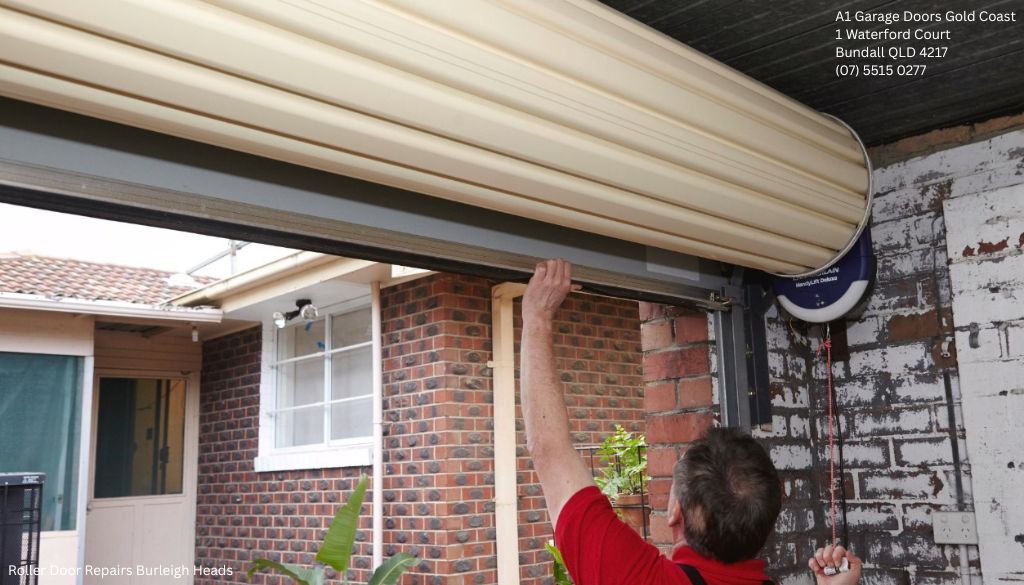
This is where commercial garage door fixings and expert household job share the very same reasoning. The mechanic has to look past the apparent mistake. Springs, cables, rollers, tracks, fasteners, hinges, and motor elements all matter. If the failure was triggered by impact, corrosion, water access, or duplicated pressure, the damage can prolong beyond what is visible at a glance.
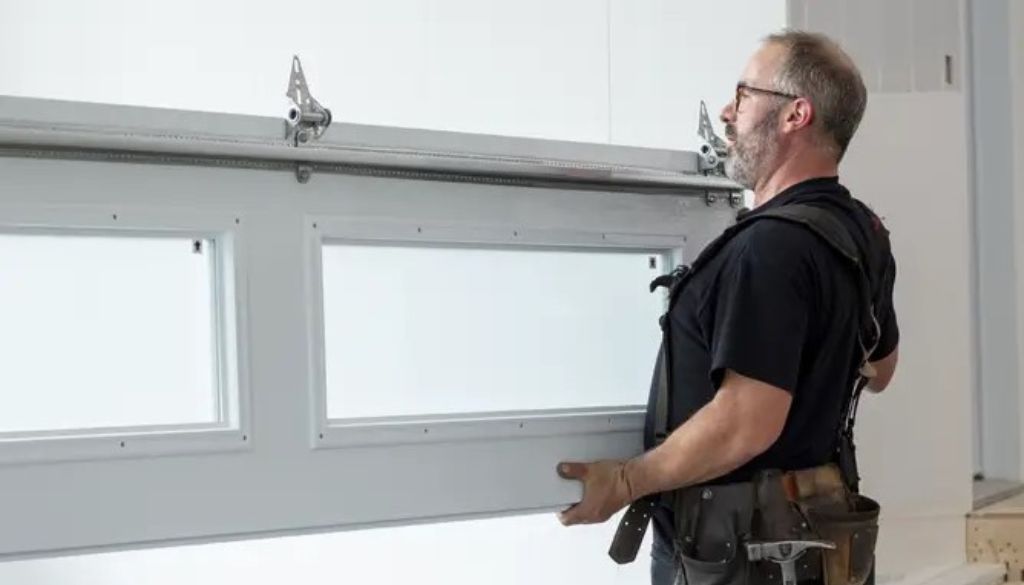
A great service technician will certainly likewise take into consideration whether the existing door type is suitable. The Gold Shore market usually contrasts roller, sectional, and tilt doors, and each has its own toughness and trade-offs. Roller doors can be portable and practical, sectional doors can provide a more refined fit and better insulation options, and tilt doors have their own operating characteristics. Yet none of those classifications is unsusceptible to wind efficiency concerns. The key question is not the design alone, it is whether the mounted product is rated, preserved, and ideal for the location.
If a door has actually currently stopped working in wind, substitute can be the cleaner option, specifically if there is deterioration, repeated solution history, or out-of-date hardware. Fixing might acquire time, but it is not constantly the most effective risk decision.
The hidden role of maintenance
A surprising number of garage door failures are not dramatic initially. They begin silently. A springtime loses performance. A cable television frays. A track drifts out of placement. The opener begins to pressure. The door still works, so the problem obtains ignored.
Regular specialist maintenance is one of the easiest means to decrease that risk. Gliderol's maintenance assistance says panel doors ought to be oiled every 3 to 6 months and serviced every 2 years, with even more frequent interest for seaside residential properties. That is a sensible reminder, not marketing fluff. Salt air, moisture, and day-to-day wear shorten the life of moving components. On the coast, corrosion avoidance is not optional housekeeping, it is part of maintaining the door usable.
Service periods additionally matter for warranty protection. Gliderol notes that failure to adhere to authorised maintenance intervals may affect guarantee protection, particularly for motorised components. B&D similarly mentions that some household garage doors and openers purchased together can carry a 10-year Complete Self-confidence Guarantee, yet just if the system is serviced within the very first year and after that at the very least every two years.
That tells you something vital regarding modern-day garage-door systems. Producers anticipate upkeep. They construct it into the item life cycle since they know springtimes, motors, remotes, and safety mechanisms do not remain trustworthy forever without attention.
The opener becomes part of the weather tale too
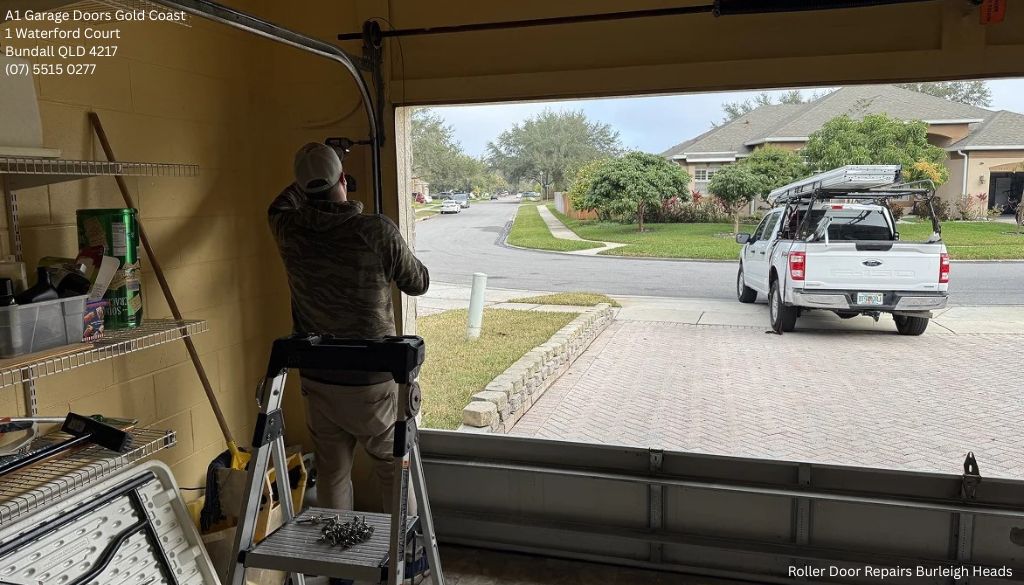
When individuals think of wind damage, they usually concentrate on the door fallen leave itself. The opener matters as well. If the opener detaches from the door, or if the door is not appropriately involved, the system might not behave as expected under tension. B&D's fixing support likewise notes that some typical concerns can be as easy as a reduced remote battery, however it stresses that trained specialists must take care of fixings and servicing.
That guidance seems small, but it is sound. A garage door system integrates kept energy, heavy moving parts, and electric parts. Springs and cords are not areas for laid-back testing. In serious winds, a marginal opener or weak connection can be part of the failing chain. If the door is not correctly protected, the best electric motor in the world will certainly deficient wind-rated.
Some more recent openers consist of solution indicator lights on picked versions, which works since it gives the owner a signal that the system desires focus. That does not change evaluation, yet it aids with timing. If the light is cautioning that solution is due, it is better to handle that prior to tornado season, not after a wind event.
What property owners commonly discover before a failure
A garage door generally gives some caution, although not always much. The indicators are often refined. The door might seem harsher than it used to. It may think twice halfway. It may move erratically or appear to emphasize one spot. In a seaside atmosphere, deterioration around the bottom side or hardware can be a very early indication that the system requires closer attention.
The sensible challenge is that owners obtain used to these signs. They adjust to a door that is a little slower or a little noisier. That is easy to understand, however in an extreme wind region, adaptation can come to be complacency. A door does not need to be significant to be hazardous. It just needs to shed adequate stamina or positioning that the following significant wind event locates the weak spot.
The safest technique is to deal with any kind of modification in activity, audio, or sealing as worth monitoring. Not every fault indicates replacement. Some are uncomplicated service issues. But in a risky location, the evaluation must be made by a person who recognizes both the equipment and the compliance context.
Security, insulation, and storm durability are connected
It is very easy to think about garage doors in separate categories: security, insulation, look, and storm performance. In truth they overlap. A door that secures well, sits directly in its tracks, and is correctly kept is usually much better all round. It is less most likely to rattle, much less likely to leakage, and less likely to fail under pressure.
Insulation might not be the initial thing people associate with serious winds, yet it matters in the larger picture of building efficiency. A well-fitted door can aid manage warmth and reduce drafts, which is useful on the shore where weather condition can swing from humid to warm to rainy. The exact same fit that helps thermal efficiency frequently helps keep the system secure under wind loading.
Security issues as well. A door that is already compromised by wear or rust can be much easier to hinder. After extreme weather condition, there is commonly a scramble to secure buildings, clear access, and assess damages. A door that still runs correctly makes that process simpler.
Choosing the appropriate feedback after a wind event
After an extreme wind occasion, the temptation is to focus on what is visible. Damaged panels, a curved track, a stuck opener, or a door that will not close correctly all demand interest. But the right feedback is normally much more determined than a quick patch.
A thorough examination ought to think about the door framework, the equipment, the opener, and the bordering opening. Damages to the wall or frame can be just as crucial as damages to the door itself. If the door has actually been dislodged of positioning, or if the taking care of factors have been jeopardized, a cosmetic fixing will certainly not solve the underlying issue.
There are truly 3 questions that matter after the storm.
- Is the door safe to operate?
- Is the door still matched to the website's wind requirements?
- Is repair work sufficient, or has the system reached replacement territory?
Those questions sound straightforward, however answering them properly takes experience. The most affordable alternative is not constantly the best one, specifically when the next storm season is currently on the calendar.
What proprietors in cyclone-prone areas must maintain in mind
Queensland's building framework is built around real risk, not abstract concept. That is why the basic matters, why wind-rated installment issues, and why older doors deserve a cautious testimonial rather than an assumption of adequacy. In influenced areas, doors set up given that 2012 are expected to meet the wind-rated criterion, which assumption is there for a reason.
For house owners, strata supervisors, and business operators, the useful takeaway is straightforward. Do not wait on a serious wind alerting to learn whether the garage door is up to the task. Inspect the service background, seek rust or activity problems, and ensure the door matches the home's direct exposure. If the residential property sits in a cyclone-prone part of Queensland, compliance with australian conformity for garage doors is not a box to tick and neglect. It becomes part of keeping the building undamaged when the weather turns.
And if a door is old, loud, covered with each other, or repetitively fixed, it might be time to stop treating it as a minor aggravation. A garage door that falls short in extreme winds can transform a convenient upkeep concern into a building-wide problem extremely promptly. That is why the best response is generally tranquil, early, and specialist, not rushed after the initial tornado warning has currently gone out.